General overview and organisational tips
When inviting participants, explain the reason for and the objective of the event as well as planned activities. Use a meeting poll like Framadate or Doodle to find the best time for the most people. Or, you may also decide to call the meeting after speaking personally to people about their availability. It is important […]
Identifying participants
Once the relevant innovation activities have been identified, you will need to select and invite workshop participants. You may invite people who were interviewed in Step 1 and/or people who were not interviewed. Power dynamics, availability, and practicality all play a role in these decisions. Bear in mind that not all guests will be able […]
Identifying relevant innovation activities
Before you begin the workshop, establishing a clear understanding of the innovation’s key activities will help you map out the actual or potential short, medium, and long-term changes from the innovation. Not all innovation activities are likely to create changes that contribute to food systems sustainability so it is important to select between 6 and […]
Organizing and running a workshop
For a successful workshop to be fully effective you will need: Between 6 and 20 participants, with a diversity of profiles to ensure adequate consultation and meet a minimal variety of viewpoints. Who to engage in the workshop will usually emerge from the interviews and as you establish the context for the innovation. As you […]
Benefits of mapping innovation & changes
Like Step 1, Step 2 of the Urbal process helps you gather, organize and understand information about the innovation. Through Step 2, you will: Gather people together in a participatory workshop to better understand the innovation. Get a big picture view of what the innovation does. Assess the innovation and see if and how it […]
Synthesize your first results
To conclude Step 1, it may be useful to summarize what you learned about the innovation in a short report. This synthetic report could include details about how you applied the method so far and what first results you obtained (interviews, timeline, actor diagram, etc.). This report can be in whatever form is most useful […]
Workshops to map innovation changes
In Step 1 you collected critical information about the innovation through a literature review and interviews. You then used these to created innovation timelines, actor maps and a draft innovation pathway map.In Step 2, you will use this information to plan and run a participatory gathering. The preferred format for this meeting is a participatory […]
Draft impact pathway map
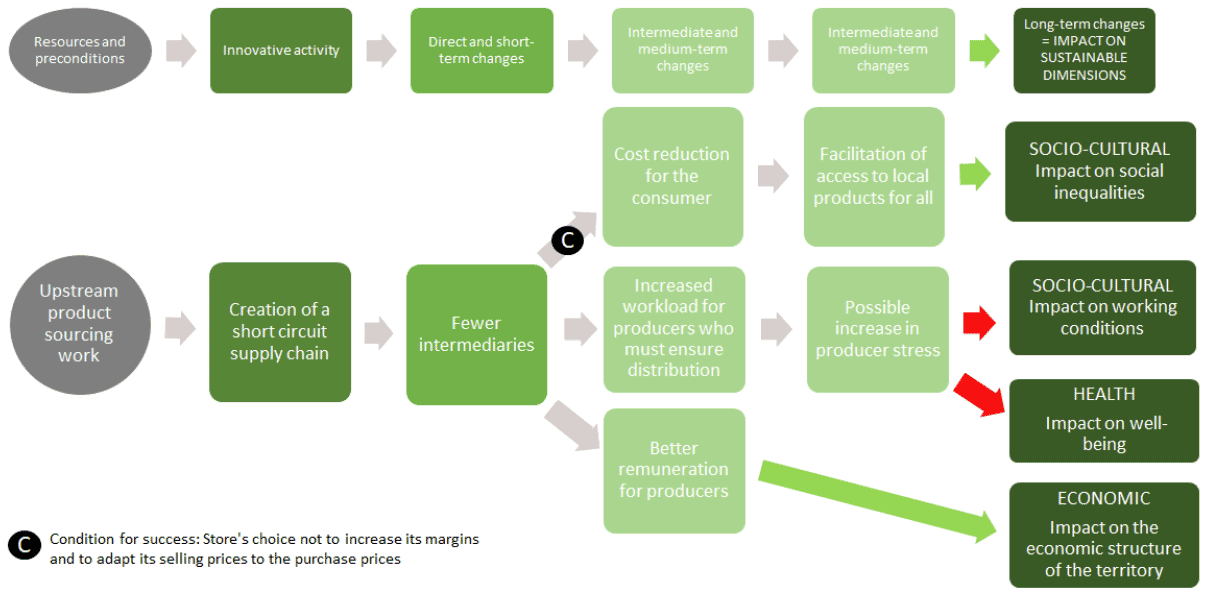
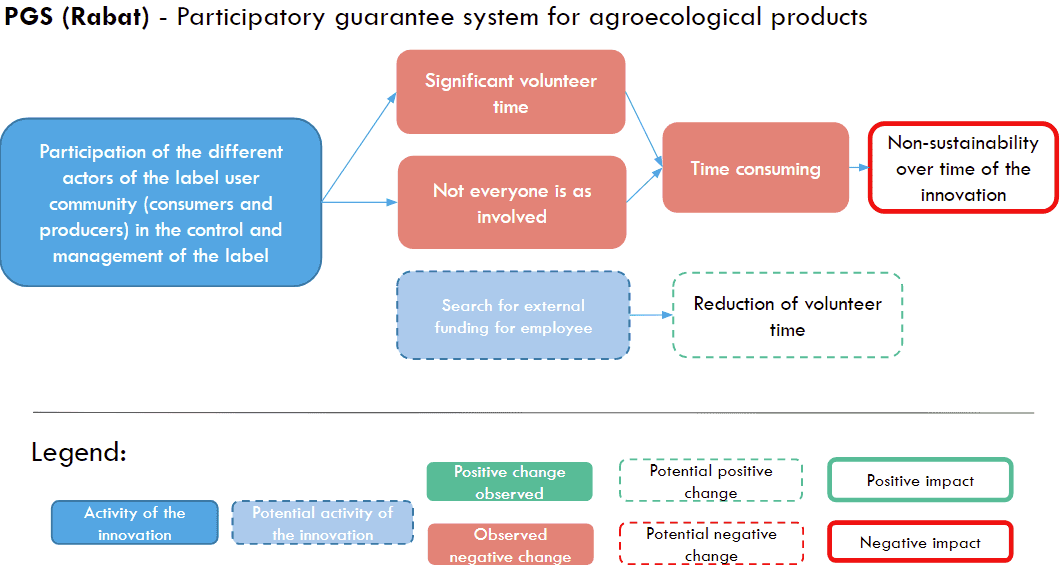
If you have enough data from the Step 1 interviews you can start to draw some preliminary impact pathway maps. Creating draft impact pathway maps is not a mandatory task at this stage, but it can help organize your ideas and key information from Step 1 to prepare for a more detailed look at the […]
Main innovation activities
Identifying the innovation activities will: 1) Provide you with an overview of the main actions connected to the innovation. 2) Help you pre-select the most relevant activities to be discussed in-depth during Step 2. As you review information collected through the interviews, you may begin to identify the most relevant innovation activities that lead to […]
Actor Diagrams
Based on the information collected in the interviews, actor diagrams depict how different groups of people are involved in the innovation. These diagrams provide an overview of how various actors are directly or indirectly involved in and affected by the innovation and the relationships between those groups. The actor diagram also helps you identify the […]